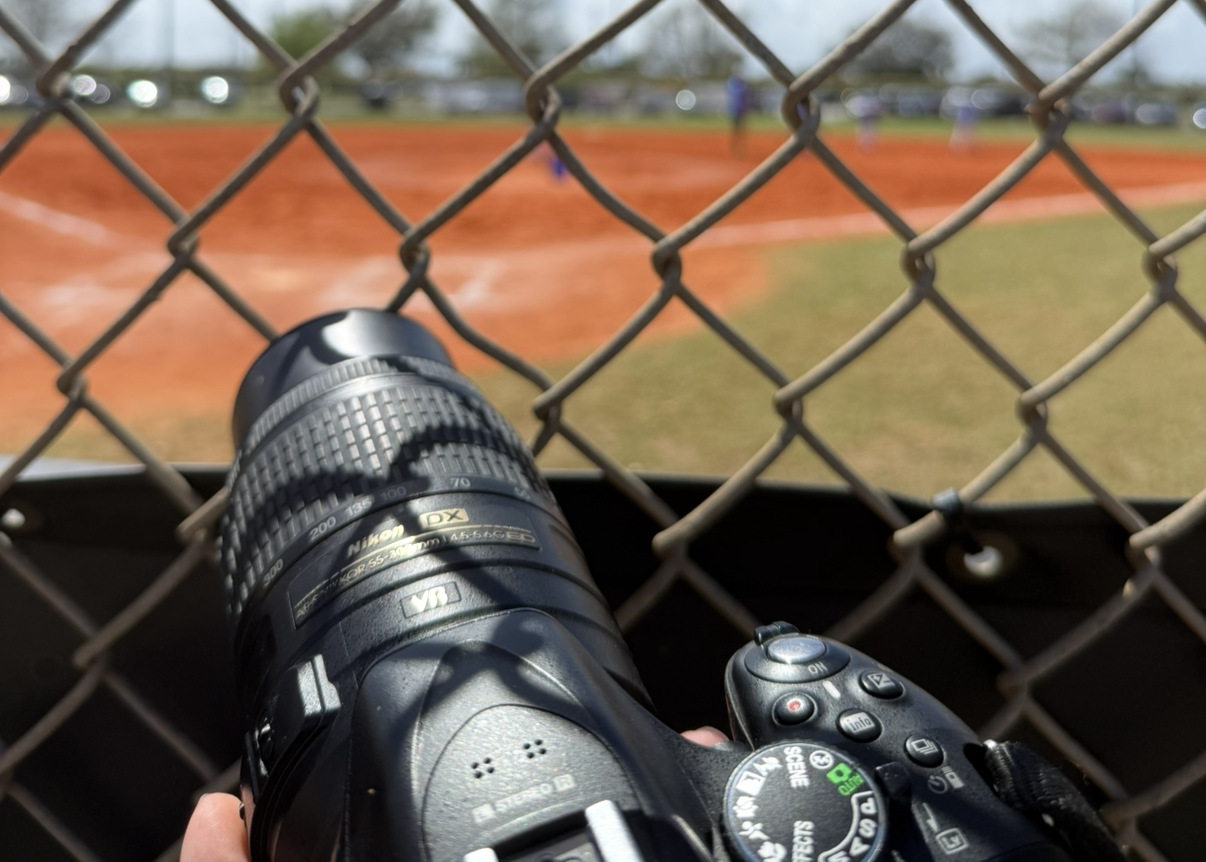


Before I ever thought of photography as an art form, or even a hobby, I used it as a means to keep myself occupied during my siblings sporting events. If we are going to be completely honest with one another, I was never an athletic person. Rarely did you ever find me running on a field, sometimes I can’t walk without tripping over my own feet. Like most people, I tried sports and participated on a very juvenile level (the highest I made it was JV softball in high school where our record showed that we had more fun picking field flowers than we did scoring runs). But this didn’t mean that I was excluded from sports. I was almost always on the sidelines of a game watching or cheering others on - most frequently my siblings’ soccer games.
Some of my earliest memories of taking pictures was from the sidelines of such games using the family’s digital camera - a Kodak EasyShare. I didn’t know anything about technique, settings or technical ability. All I knew was how to follow the action and that when the camera was in my hand, the game seemed to fly by. As time went on, my parents upgraded me to my first DSLR and I kept showing up and shooting. I photographed my siblings, their teams, and the games/events that filled our family’s calendar.
These early years were where I learned the foundations for photography. The cameras I had at my disposal were not extremely fancy or advanced. I was not working with a 30fps (frames per second) burst rate, or a $10,000 lens. This forced me to learn the sport to better learn the art, and without realizing it I picked up on how to anticipate the next play, judge the reaction of a player, predict the action, choose where to stand, and when to press the shutter. This has led me to have amazing timing with my shots, allowing me to rely on skill rather than leaning into the safety of a quick shutter. The sidelines of every game became a classroom, and the repetition of it all became a teaching tool.
In high school, that passion grew into something slightly more official. I loosely started a photography business. It was so small that I made less than what would be required for taxation purposes as I often waived fees to share images with friends. It was a platform in which I could give back to the community and share a large amount of photos with people. It taught me to establish relationships, maintain a website, track and organize material, and the basis of business. This is what started my thinking of approaching photography with intention rather than just as a hobby or something I enjoyed. Through this, I saw how meaningful photos could be to others. This realization shifted my perspective on the whole idea of photography, and the work became less about the technicality and more about the people.
During this time, alongside sports, I also started in portrait photography - taking pictures for sorority applications, senior portraits, and professional headshots. These sessions introduced a completely different side of photography. One that forced a different mindset on capturing the right shot, and one that exposed me to a different kind of storytelling. I learned that portraits more so than sports are dependent on the connection and trust of the photographer and the client. There must be a level of comfort that exists in order to capture authentic moments, and a level of vulnerability to be spotlighted in this way.
My experience in high school led me into professional environments. I briefly contracted with a company in Massachusetts and Connecticut that focused on local middle schools and high schools. With them, I photographed more sports and broadened my portfolio to events such as Prom. This opportunity taught me how to balance creativity with responsibility in a more real-world setting. I gained experience working within established timelines, expectations and workflows.
During COVID, I offered to photograph sports for my local high school so that families and fans unable to attend the games due to travel restrictions and spectator limitations could still have images to commemorate their athletes. My favorite games to shoot were the Senior Nights, because I know how meaningful a Senior Night can be to those on and off the field. In a time when so much was uncertain, so much was changed, and so much was limited, I was happy to give back to my community and preserve moments that otherwise may have been missed or lost.
Eventually, my life shifted, and I stepped back from photography (read about it in Picking the Camera Back Up (For Real)). Even though I took a break, I continued to occasionally shoot - for my siblings’ final seasons, and for the one-off opportunities here and there (including a few weddings).
Looking back on the whole of my photography experience, my journey has shaped the way I think and work today. From those early sidelines to professional settings, from fast-paced sports to personal portraits, each experience built the basis for how I see, shoot, and tell stories. Now, photography is about more than just the images it produces. It is truly about connection, presence, and preserving meaningful moments.